
Blog · 22 August 2025 · 3 min read
Designing and using your cold room well: the complete WeChefs guide
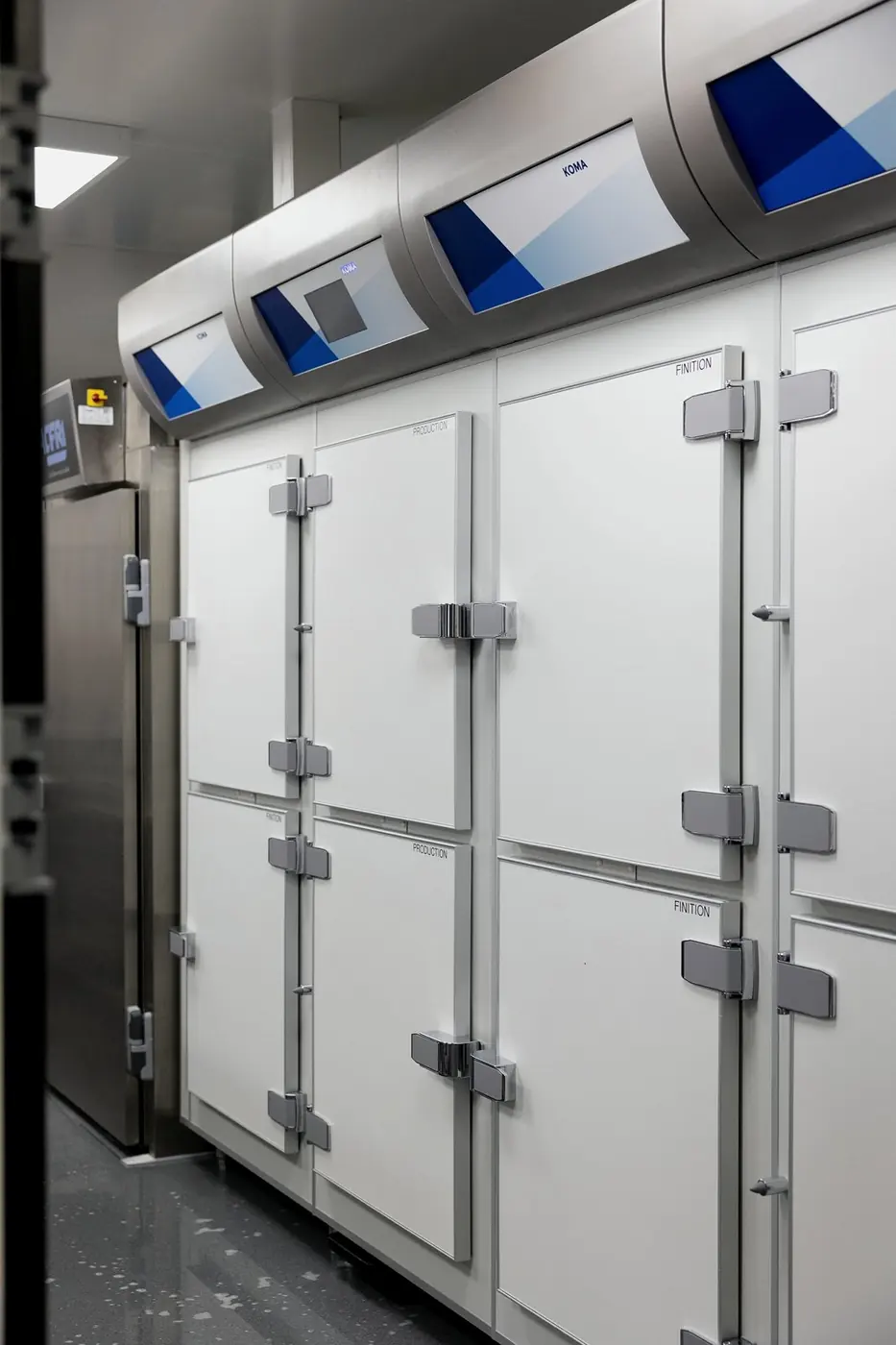
1. Designing an efficient cold room
Performance depends on precise sizing and a suitable installation.
a) Insulation and airtightness
- Insulated panels: 80 to 100 mm for chilled rooms (+2 / +4 °C), 120 to 150 mm for frozen rooms (−18 °C).
- Airtight joints: air leaks increase consumption.
- Insulated floor: mandatory for frozen rooms to prevent rising damp.
b) Sizing
- Suitable capacity: avoid over- or under-sizing.
- Air circulation: allow at least 15% free volume.
c) Strategic location
- Install the room in a cool, ventilated area, away from the sun.
- Provide practical access for logistics flows.
d) Equipment and monitoring
- Refrigeration units suited to the use.
- Alarms and data loggers, essential for HACCP traceability.
- Efficient ventilation for an even temperature.
2. Good practice for optimal use
- Limit door openings: each opening lets in warm air and humidity.
- Check the seals: a worn seal leads to infiltration and overconsumption.
- Optimise storage: do not place products against the walls, leave 10 cm in front of evaporators.
- Clean regularly: floors, walls, evaporators.
- Monitor temperatures: record data at least twice a day.
3. Focus: use during heatwaves
Recommended technical settings
- Chilled rooms: +2 / +4 °C.
- Frozen rooms: −18 °C.
- Alarms: triggered if the deviation exceeds ±2 °C.
Reinforced monitoring
- Manual readings twice a day (morning and evening).
- Checking connected alarms.
- Energy monitoring.
Heatwave good practice
- Organise flows to limit prolonged door openings.
- Never store products that are still hot.
- Clean condensers to prevent overheating.
- Schedule preventive maintenance before the summer.
4. Servicing and maintenance
| Frequency | Actions |
|---|---|
| Daily | Temperature checks, condition of doors, storage |
| Weekly | Cleaning of floors and walls |
| Monthly | Inspection of seals and evaporators |
| Annual | Full maintenance by a certified refrigeration technician |
5. Energy performance and regulatory compliance
- Energy monitoring: reduce consumption by up to 15%.
- Regulations: obligations regarding refrigerants and HACCP traceability.
Conclusion
The cold room is a strategic tool to secure production, control costs and meet health standards. Anticipation is essential during hot weather.