
Food laboratory: CAPEX or OPEX? How to make the right call
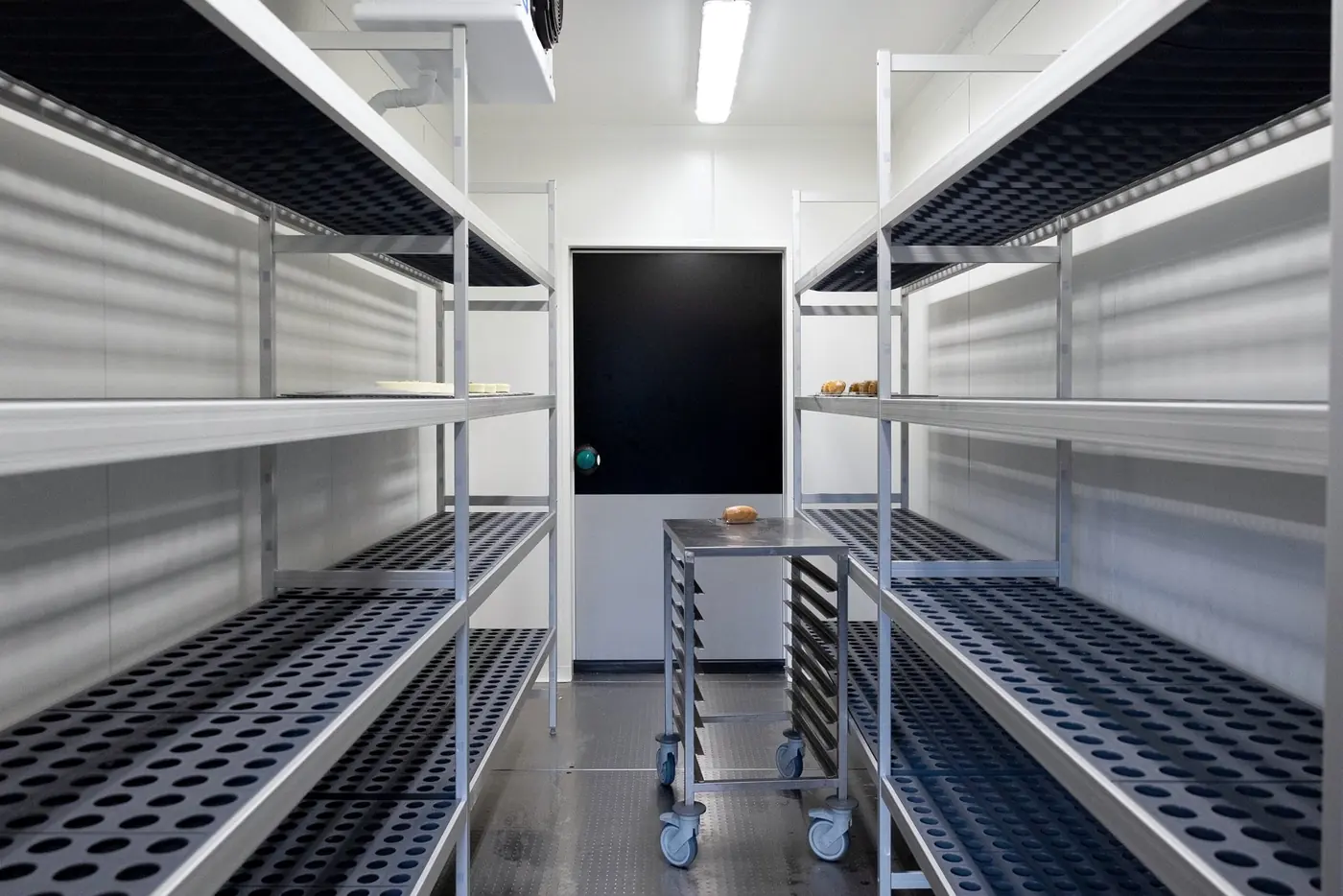
Owning your own production laboratory may look like a prerequisite for any professional culinary business. It is often a costly misconception. For a growing number of food operators, from small businesses to brands in the middle of structuring, renting a laboratory is no longer a fallback: it is a deliberate management choice that optimises the cost structure and preserves investment capacity where it really creates value.
CAPEX vs OPEX: a reminder of what is at stake for food production
In corporate finance, the distinction between capital expenditure (CAPEX) and operating expenditure (OPEX) is fundamental. It shapes the balance sheet, current profitability and operational flexibility.
In the food sector, this logic fully applies to the question of the production laboratory. Building or acquiring your own production facility means tying up capital in physical assets. Renting a laboratory turns that fixed asset into a variable cost, indexed to your actual level of activity.
What the figures reveal
Setting up a compliant food laboratory in the Paris region involves costs that are often underestimated in the initial business plan. Beyond the commercial rent, many items weigh heavily.
The right call for your stage of development
There is no universal answer. It depends on your operational maturity and your growth objectives.
For a business in its launch or validation phase, OPEX is the obvious choice. Capital should fund market entry, business development and skills, not real estate assets. Renting a laboratory frees up cash and lets you test real volumes before sizing a production facility.
For a company in rapid growth, renting remains advantageous as long as capacity needs keep changing quickly. Signing a 9-year lease on 100 m² while your business doubles every year means risking being cramped within 18 months, or oversized if growth slows.
CAPEX only makes sense again for stabilised businesses, with predictable long-term volumes and enough activity to absorb the fixed costs of the production facility.
The question is not "can I afford a laboratory?" but "does my level of activity justify tying up capital in a production asset?"
The concrete benefits of switching to OPEX
- Preserved working capital: no capital tied up, cash remains available for business development, hiring or stock.
- Immediate scalability: increase production slots within days, with no lease amendment or additional investment.
- Zero regulatory risk: HACCP compliance upgrades, equipment maintenance and health inspections are handled by the lab operator.
- Accounting clarity: a predictable operating expense, 100% deductible, without the uncertainty of depreciation or commercial rent reviews.
- Reversibility: if the market changes, the business pivots or volumes fall, the cost structure adjusts without major exit costs.
WeChefs: a laboratory designed for professional trade-offs
WeChefs gives food professionals access to compliant, fully equipped food laboratories in Nanterre (Hauts-de-Seine), and soon in central Paris and Lyon (Rhône-Alpes). The logic is simple: you only pay for the production time you actually use, with the option to scale your production volume up or down as needed.
For businesses that think in terms of business cases, it is a credible alternative to investing in your own facility: zero capital tied up, zero regulatory surprises and full budget visibility from the first month.
Assess the real cost of your production
Our teams can help you compare the cost of owning a laboratory with renting one, based on your level of activity. Get in touch for a personalised analysis: contact@wechefs.fr.