
The chocolate laboratory: a lab like no other
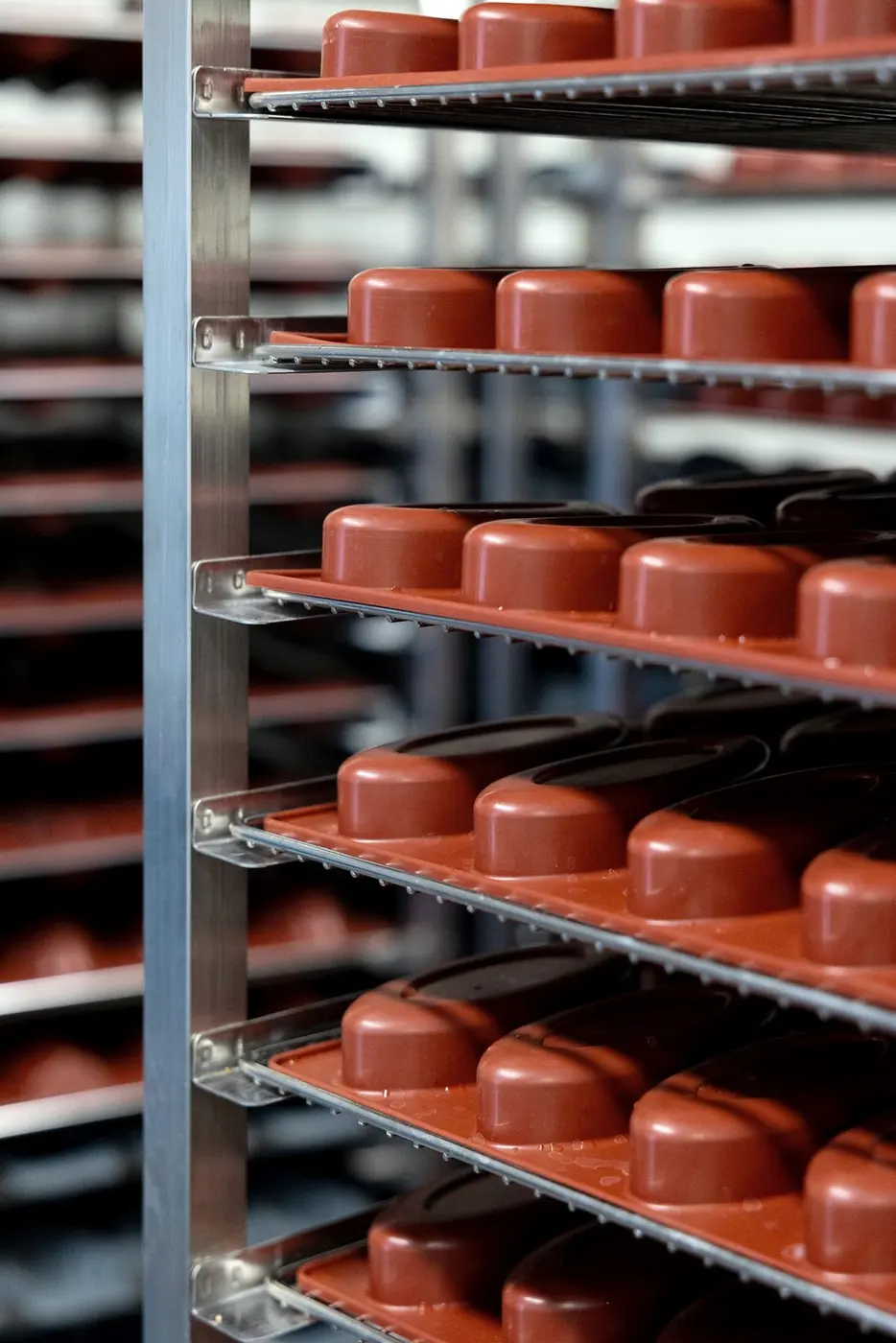
How to design, organise and optimise a professional chocolate laboratory.
The chocolate laboratory is one of the most technical environments in the food sector. The quality of the finished product does not depend on know-how alone: everything rests on the production environment. Temperature, humidity, flows and specialised equipment make a chocolate lab a unique and highly regulated space.
1. Why is a chocolate laboratory unique?
Chocolate is a sensitive material that reacts to environmental variations. Unlike other food laboratories, a chocolate lab must guarantee:
- constant thermal stability: 15 to 18 °C in moulding and finishing areas;
- humidity controlled at around 50 to 55%;
- no moisture;
- isolation from sources of heat and steam;
- controlled air circulation, without draughts.
Without these parameters, defects appear such as blooming, cracks, marbling and loss of aroma.
2. Temperatures: the number-one issue in a chocolate laboratory
Working area (15 to 18 °C)
Ideal for moulding, assembly and enrobing, ensuring stable crystallisation.
Chocolate storage room (14 to 16 °C)
Essential to stabilise mouldings and store finished pieces.
Chilled cold rooms
For ganaches, pralines, inserts and dried fruit, with neutral humidity.
Gentle ventilation
Too much airflow can ruin an entire production run.
3. Humidity: the invisible parameter that changes everything
Chocolate absorbs moisture and odours. Poorly controlled humidity leads to:
- condensation;
- loss of shine;
- sticky texture;
- "blooming" (white film);
- cracks when unmoulding.
A humidity control system set at around 50 to 55% remains essential.
4. Essential equipment for a chocolate laboratory
Must-have equipment
- Tempering machines (the heart of the laboratory)
- Cooling tunnels
- Enrobing machines
- Spraying booths
Additional equipment
- Mixers for pralines and pastes
- Gentle ovens for roasting
- Grinders and conches for bean-to-bar production
- Temperature-controlled storage rooms
5. Hygiene in a chocolate laboratory: a specific approach
Chocolate requires:
- dry hygiene;
- little use of water;
- clean, particle-free air;
- no steam at all;
- no stray odours.
Hot areas must be strictly separated from the chocolate laboratory. Cleaning relies on reducing deposits and vacuuming dry particles.
6. Organisation and flows: industrial efficiency serving craftsmanship
A typical optimised chocolate lab flow:
- Receiving and warming the raw chocolate
- Tempering stations
- Moulding or enrobing
- Cooling tunnels
- Finishing and spraying
- Chocolate storage
- Temperature-controlled dispatch
7. Designing a professional chocolate laboratory: WeChefs expertise
WeChefs designs and fits out professional food laboratories for chocolatiers. Our installations meet the key requirements:
- thermal control;
- controlled humidity;
- properly sized networks;
- multiple tempered areas;
- flow management;
- production ergonomics;
- sanitary compliance;
- energy optimisation.
Conclusion
A chocolate lab is not just a production space: it is the first guarantor of chocolate quality. Every detail counts to reveal the product's potential: shine, controlled textures and long-lasting stability.